
Paris
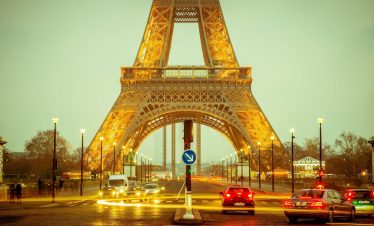
Paris is the capital and most populous city of France, with an administrative-limits area of 105 square kilometres (41 square miles) and a 2015 population of 2,229,621. The city is a commune and department, and the capital-heart of the 12,012-square-kilometre (4,638-square-mile) Île-de-France region (colloquially known as the ‘Paris Region’), whose 2016 population of 12,142,802 represents roughly 18 percent of the population of France.[5] By the 17th century, Paris had become one of Europe’s major centres of finance, commerce, fashion, science, and the arts, a position that it retains still today. The Paris Region had a GDP of €649.6 billion (US $763.4 billion) in 2014, accounting for 30.4 percent of the GDP of France. According to official estimates, in 2013-14 the Paris Region had the third-highest GDP in the world and the largest regional GDP in the EU.
Hiking
Hiking is the preferred term, in Canada and the United States, for a long, vigorous walk, usually on trails (footpaths), in the countryside, while the word walking is used for shorter, particularly urban walks. On the other hand, in the United Kingdom, and the Republic of Ireland, the word “walking” is acceptable to describe all forms of walking, whether it is a walk in the park or backpacking in the Alps. The word hiking is also often used in the UK, along with rambling (a slightly old-fashioned term), hillwalking, and fell walking (a term mostly used for hillwalking in northern England). The term bushwalking is endemic to Australia, having been adopted by the Sydney Bush Walkers club in 1927. In New Zealand a long, vigorous walk or hike is called tramping.It is a popular activity with numerous hiking organizations worldwide, and studies suggest that all forms of walking have health benefits.
In the United States, Canada, the Republic of Ireland, and United Kingdom, hiking means walking outdoors on a trail, or off trail, for recreational purposes. A day hike refers to a hike that can be completed in a single day. However, in the United Kingdom, the word walking is also used, as well as rambling, while walking in mountainous areas is called hillwalking. In Northern England, Including the Lake District and Yorkshire Dales, fellwalking describes hill or mountain walks, as fell is the common word for both features there.
Hot Air Ballon
A hot air balloon is a lighter-than-air aircraft consisting of a bag, called an envelope, which contains heated air. Suspended beneath is a gondola or wicker basket (in some long-distance or high-altitude balloons, a capsule), which carries passengers and a source of heat, in most cases an open flame caused by burning liquid propane. The heated air inside the envelope makes it buoyant since it has a lower density than the colder air outside the envelope. As with all aircraft, hot air balloons cannot fly beyond the atmosphere. Unlike gas balloons, the envelope does not have to be sealed at the bottom, since the air near the bottom of the envelope is at the same pressure as the surrounding air.
In modern sport balloons the envelope is generally made from nylon fabric and the inlet of the balloon (closest to the burner flame) is made from a fire resistant material such as Nomex. Modern balloons have been made in all kinds of shapes, such as rocket ships and the shapes of various commercial products, though the traditional shape is used for most non-commercial, and many commercial, applications.
Jungle Safari
A is an overland journey, usually a trip by tourists to Africa. In the past, the trip was often a big-game hunt, but today, safari often refers to trips to observe and photograph wildlife—or hiking and sightseeing, as well.
The Swahili word safari means journey, originally from the Arabic meaning a journey; the verb for “to travel” in Swahili is kusafiri. These words are used for any type of journey, e.g. by bus from Nairobi to Mombasa or by ferry from Dar es Salaam to Unguja. Safari entered the English language at the end of the 1850s thanks to Richard Francis Burton, the famous explorer.
The Regimental March of the King’s African Rifles was ‘Funga Safari’, literally ‘tie up the March’, or, in other words, pack up equipment ready to march.
In 1836 William Cornwallis Harris led an expedition purely to observe and record wildlife and landscapes by the expedition’s members. Harris established the safari style of journey, starting with a not too strenuous rising at first light, an energetic day walking, an afternoon rest then concluding with a formal dinner and telling stories in the evening over drinks and tobacco.
Peak Climbing
A climbing peak may refer to a mountain or hill peak or a rock formation that has to be ascended by climbing. The term is common in Germany where it is specifically used of free-standing rock formations in the climbing regions of Saxon Switzerland, Zittau Mountains and other nearby ranges in the German Central Uplands that can only be summitted via climbing routes of at least grade I on the UIAA scale or by jumping from nearby rocks or massifs. As a general rule, they must have a topographic prominence of at least 10 metres to qualify. In Saxon Switzerland the Saxon Climbing Regulations do not require any minimum height, but define climbing peaks as
Another requirement is its recognition by the responsible sub-committee of the Saxon Climbers’ Federation (SBB) and the responsible conservation authorities. For hikers these authorized summits may often be recognised by the presence of a summit register and abseiling anchor points.
In other climbing areas, such as those in Bohemian Switzerland, there are other exceptions. There, climbing peaks only need to have a significant rock face – the lowest side of which has to be less than 10 m high, but at least 6 m high.
Sightseeing
Tourism is travel for pleasure or business; also the theory and practice of touring, the business of attracting, accommodating, and entertaining tourists, and the business of operating tours. Tourism may be international, or within the traveller’s country. The World Tourism Organization defines tourism more generally, in terms which go “beyond the common perception of tourism as being limited to holiday activity only”, as people “traveling to and staying in places outside their usual environment for not more than one consecutive year for leisure, business and other purposes”.